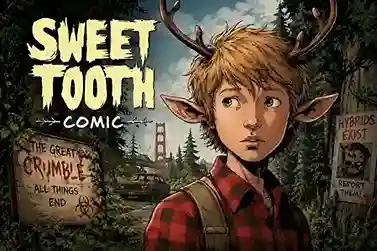
Sweet Tooth Comic: The Ultimate Story, Characters, and Ending Guide
You finished the Netflix series and feel confused. The show left you with questions, and everywhere you look, someone mentions the original Sweet Tooth comic is darker, stranger, more haunting. Without a trustworthy guide, you risk misunderstanding the powerful ending and missing what makes Jeff Lemire’s story unforgettable. This single hub solves that. It dissects every crucial aspect of the Sweet Tooth comic so you can understand the essence of the masterpiece and observe how it varies from the adaptation.
What Is the Sweet Tooth Comic?
The Sweet Tooth comic is a post-apocalyptic Vertigo series created by Jeff Lemire. DC published it monthly from 2009 to 2013, and it later collected into six trade paperbacks or a single deluxe hardcover. The story follows Gus, a gentle boy with antlers, born after a mysterious pandemic wiped out most of humanity. He navigates a world where hybrid children like him are hunted, and survival depends on trust and sacrifice.
Lemire writes and draws every page, giving the book a raw, intimate feel. The emotional core turns on fatherhood, innocence, and the stories we tell ourselves to keep hope alive. The Sweet Tooth comic fuses fairy-tale wonder with brutal realism, and that tension has earned it comparisons to The Road and Bambi. Vertigo’s trademark mature storytelling shines throughout, and the series remains one of the label’s most beloved original titles.
Meet the Main Sweet Tooth Comic Characters
The cast of the Sweet Tooth comic drives every gut-punch moment. These are the key players you should be familiar with.
| Character | Description | Role in the Story |
|---|---|---|
| Gus | A sweet, deer-like hybrid boy raised in isolation. | The heart of the journey; his innocence reshapes hardened survivors. |
| Jepperd | A towering, violent ex-hockey enforcer. | Gus’s reluctant protector; his redemption arc forms the emotional backbone. |
| Dr. Singh | A scientist studying hybrids to find a cure. | Embodies the moral cost of survival; his arc asks what you would sacrifice. |
| Hybrid Children | Kids born with animal features (pig, rabbit, bird, etc.). | Represent a new innocent world that humanity fears and covets. |
| Abbot | A brutal militia leader. | The human antagonist who hunts hybrids for power. |
| Buddy | A dog hybrid and Gus’s loyal friend. | Symbolizes pure loyalty and the hope for a peaceful future. |
Secondary players like Lucy, Johnny, and Becky deepen the sweet tooth comic characters’ world, but the table above covers the souls that carry the narrative.
The Emotional Story Arc of the Sweet Tooth Comic
Gus lives in a Nebraska forest with his dying father, who fills his head with religious stories. After his father passes, Gus meets Jepperd, who promises to lead him to “The Preserve,” a sanctuary for hybrids. The pair treks across a ravaged America, encountering marauders, abandoned towns, and the ever-present danger of The Sick.
The journey repeatedly tests whether Jepperd can outrun his violent past. Flashbacks reveal that Jepperd lost his own family and once hunted hybrids. His guilt forces him to protect Gus, and the relationship shifts from transaction to real love. Meanwhile, Dr. Singh’s storyline runs in parallel, showing the horrific experiments meant to save humanity. The tension builds until all paths crash together at a remote Alaskan outpost, where the true origin of the hybrids and the pandemic finally comes to light.
Sweet Tooth Comic Ending Explained
The Sweet Tooth comic ending stuns new readers because it rejects easy comfort. Gus and the remaining hybrids reach a frozen research station where it’s revealed that the deer boy carries an ancient, mystical link to nature itself. A cosmic being explains that the hybrid phenomenon was Earth’s immune response to a self-destructive human race. The plague did not randomly create animal children; it awakened a new mythology.
Jepperd sacrifices himself to give Gus time to bury the old world. Gus digs a grave in the ice and places Jepperd’s body there, an act of profound love that ends the cycle of violence. In the final pages, an elderly Gus tells the story to a new generation of hybrid children around a campfire. The last panel shows a glowing apple tree growing from Jepperd’s grave, confirming that sacrifice seeded a new, kinder world. The ending closes on gentle hope, earned through pain. Many fans call the sweet tooth comic ending one of the most satisfying in modern graphic fiction.
Sweet Tooth Comic vs Show: The Biggest Differences
Viewers who jump from Netflix to the page often feel whiplash. The sweet tooth comic vs show comparison reveals a much harsher original. Here are the key departures.
- Tone and Violence: The comic is relentlessly grim. Jepperd kills without hesitation, and the body count is high. The show softens his brutality to keep him likeable.
- The Hybrid Origin: The comic supplies a supernatural, mythic explanation. The show pivots toward a scientific government experiment.
- Dr. Singh’s Arc: In the comic, Singh’s desperate surgery on his wife is far more grotesque. His morality frays thread by thread, unlike the show’s more conflicted but restrained portrayal.
- Bear and Supporting Hybrids: The series expands minor comic characters and adds new ones, like Bear, who does not exist in the same form in the source material.
- The Preserve and Alaska: The show restructures the final act. The Alaska finale and the ancient burial ground remain unique to the sweet tooth comic book.
These changes aren’t bad; they adjust the material for a broader audience. But the comic’s rawness delivers a more personal, unrelenting meditation on sacrifice.
Jeff Lemire’s Art Style and Its Impact
Lemire’s scratchy, watercolor-washed art divides readers at first glance. Some call it crude; others see genius. The loose linework conveys a fragile world breaking apart. Gus’s oversized antlers and big eyes radiate innocence, while the landscapes feel windswept and empty. The art matches the story’s emotional state: when hope surges, the brushwork lightens; when violence erupts, the panels grow cramped and jagged.
The lettering also plays a role. Gus’s narration appears in a childlike scrawl, making you feel as though you’re reading a scared kid’s diary. No other artist draws the Sweet Tooth comic, and that unity of vision makes the book feel handmade. This signature style sets it apart from glossy superhero comics and has influenced a wave of creator-owned graphic novels.
Major Themes: Innocence, Sacrifice, and Hope
The Sweet Tooth comic explores three big ideas without preaching.
Innocence — Gus never loses his belief in goodness. Even after witnessing horrors, he chooses kindness. The comic asks if innocence is naivety or the strongest survival tool.
Sacrifice — Nearly every main character gives up something irreplaceable. Jepperd gives his life. Singh gives his humanity. The hybrid children leave safety behind. These acts carry a quiet weight because Lemire never glamorizes them.
Hope — The ending insists that hope is not a feeling but a story we protect. Gus becomes a storyteller, passing hope to the next generation. That single image of the apple tree declares that renewal comes through love, not force.
Why the Sweet Tooth Comic Book Resonates with Readers
The sweet tooth comic book hit shelves during a boom of dystopian fiction, yet it stands apart. It never indulges in nihilism. Instead, it wraps a father-son story inside a horror premise. Readers connect with Jepperd’s redemption because it feels earned page by bloody page. Gus’s voice as a narrator strips away cynicism and reminds adults what it felt like to believe in happy endings.
Comic book clubs and review platforms like Goodreads consistently praise the series for its tight 40-issue structure. It begins, builds, and ends exactly where it needs to. That restraint alone builds deep trust with the audience.
Collecting the Sweet Tooth Comic Book: Editions and Reading Order
You can dive into the sweet tooth comic book through these formats.
- Original Trade Paperbacks (Vol. 1–6): Out of the Deep Woods, In Captivity, Animal Armies, Endangered Species, Unnatural Habitats, Wild Game. These match the original story arcs.
- Sweet Tooth Compendium: A single softcover volume collecting all 40 issues. Great for budget-conscious readers.
- Sweet Tooth Deluxe Edition (Books 1–3): Oversized hardcovers with bonus sketches and commentary from Jeff Lemire. Ideal for collectors.
- The Return: A 2020 DC Black Label miniseries set years after the ending, following an adult Gus. Read it only after finishing the main series to avoid major spoilers.
Always start with Volume 1 or the Compendium. The story reads beautifully in one massive sitting.
Critical Reception and Awards
Critics and institutions quickly recognized the Sweet Tooth comic as a standout. It earned a Eisner Award nomination for Best New Series. The American Library Association listed it on their Great Graphic Novels for Teens roster, acknowledging its cross-generational appeal. Publications like IGN and The Guardian have praised Lemire’s ability to balance horror with heart, with some reviewers calling it “the most human post-apocalyptic story.” Jeff Lemire himself has stated in interviews that the comic remains his most personal work, drawing from his own fears about parenthood and loss.
Sources: DC official page, IGN review of Sweet Tooth comic vs show, Jeff Lemire’s Substack.
Frequently Asked Questions About the Sweet Tooth Comic
What is the Sweet Tooth comic about?
It follows Gus, a deer-human hybrid, and his hardened protector Jepperd as they travel across a plague-ravaged America seeking a safe haven.
How does the Sweet Tooth comic end?
Gus buries Jepperd in the Alaskan ice and becomes a storyteller for future hybrid generations; a supernatural apple tree grows from the grave, symbolizing renewal.
Who are the main characters in the Sweet Tooth comic?
Gus, Jepperd, Dr. Singh, and a family of hybrid children form the core ensemble, with Abbot serving as the human threat.
Is the Sweet Tooth comic different from the Netflix show?
Yes, the sweet tooth comic vs show comparison reveals a much darker tone, a mythical hybrid origin, and a more ruthless Jepperd.
What age group is the Sweet Tooth comic suitable for?
The book targets mature teens and adults due to graphic violence, disturbing imagery, and heavy thematic content.
Where can I read the Sweet Tooth comic series?
You can purchase the collected volumes through DC’s official website, local comic shops, and digital platforms like Comixology.
Your Next Step Into This Unforgettable World
The Sweet Tooth comic delivers a singular experience that stays in your bones long after the final page. You now have the map: characters, the complete ending breakdown, and the show differences that often confuse newcomers. Don’t let the story end here. Grab the first volume, sink into Lemire’s watercolor wilderness, and walk with Gus all the way to Alaska. Share this guide with a friend who still thinks the show told the whole story—it didn’t. The real heart of the tale waits inside the pages.