The Webtoon Manhwa Handbook: Everything Readers and Creators Need to Know
You open your phone, tap an app, and start scrolling. A full-color story unfolds vertically—no page flips, no right-to-left confusion. That seamless reading moment is the webtoon manhwa experience, and it has quietly rewired how millions consume comics worldwide. Whether you are a curious newcomer or a creator hunting for a publishing home, this guide gives you the full picture: history, platforms, genres, money, and the road ahead. Let’s scroll through it together.
What Exactly Is a Webtoon Manhwa?
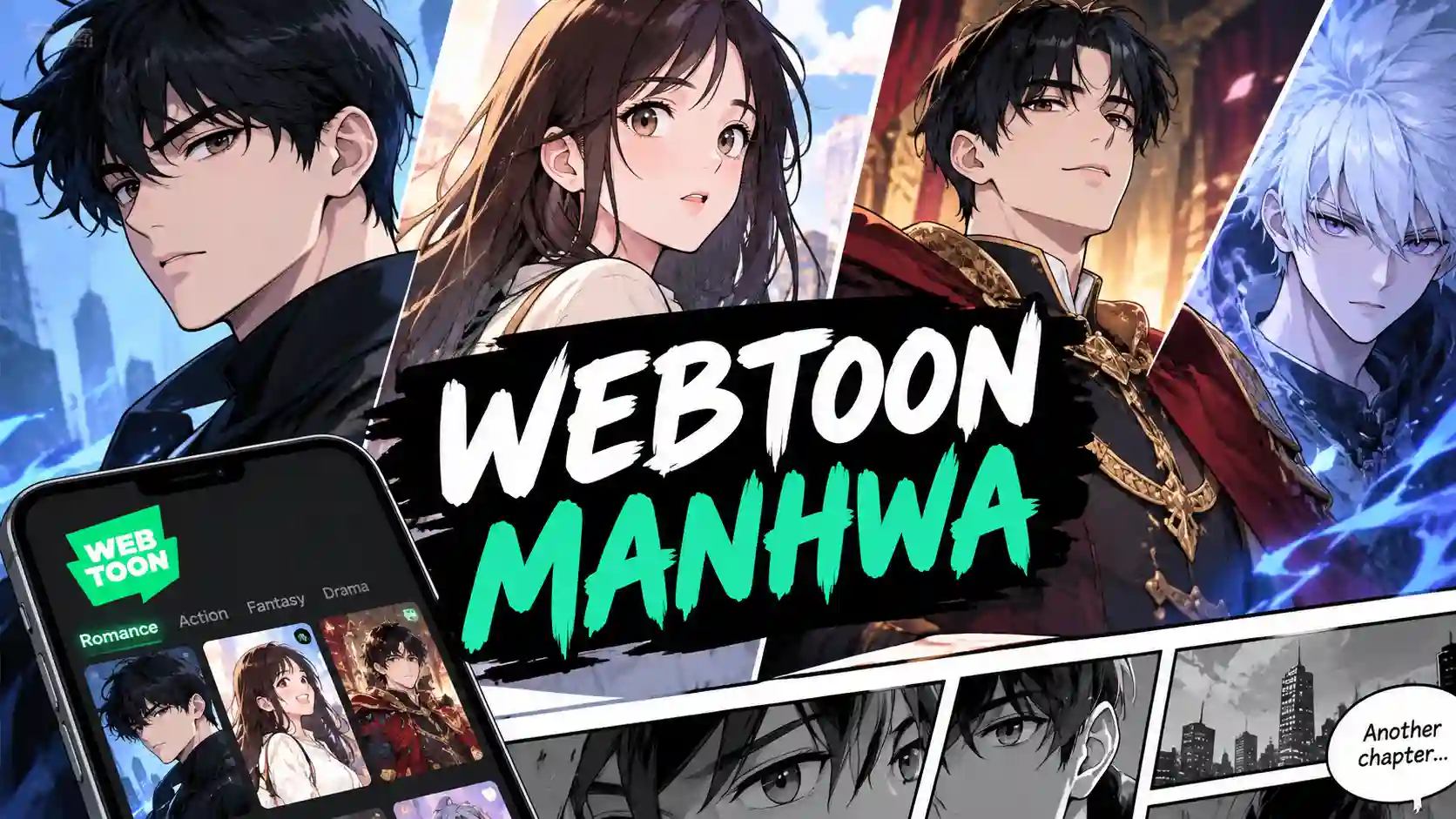
A webtoon manhwa is a Korean comic built specifically for vertical scrolling on digital screens. The term blends “web” and “cartoon,” while manhwa is the Korean word for comics generally. In practice, webtoons are the digital, mobile-optimized evolution of manhwa—colorful, episodic, and engineered for the way people actually hold their phones.
Unlike traditional print comics, webtoon manhwa episodes release on weekly schedules, often end on cliffhangers, and invite real-time reader comments. That serialized, interactive rhythm is part of what makes the format feel alive rather than static.
Quick distinction: “Manhwa” can refer to Korean comics in print or digital form. “Webtoon” describes the format and distribution model. Every webtoon manhwa is a webtoon, but not every manhwa is a webtoon.
Webtoon Manhwa vs. Manga vs. Manhua: Clearing the Confusion
Readers often bundle these three terms together because the words sound alike and the art styles can overlap. The differences come down to origin, reading direction, and color conventions.
Manga originates in Japan and traditionally reads right to left, usually in black and white. Manhwa originates in Korea, reads left to right, and is frequently published in full color. Manhua originates in China (including Taiwan and Hong Kong) and can appear in both print and digital forms, often in color.
| Feature | Manga | Manhwa / Webtoon Manhwa | Manhua |
|---|---|---|---|
| Origin | Japan | Korea | China, Taiwan, Hong Kong |
| Reading direction | Right to left | Left to right | Varies; often left to right |
| Color | Traditionally black and white | Often full color (especially webtoons) | Frequently full color |
| Primary format | Print-first, digital secondary | Digital-first (vertical scroll) | Mixed print and digital |
| Creator title | Mangaka | Manhwaga | Manhuajia |
This distinction matters for search intent and for readers who want a specific storytelling flavor. A webtoon manhwa recommendation is not interchangeable with a manga recommendation—the pacing, panel rhythm, and release cadence differ.
The Origin Story: How Webtoon Manhwa Became a Global Format
The webtoon manhwa timeline began in 2003 when Kang Full’s Love Story launched on the Daum portal. Its popularity led to the creation of Daum Webtoon—now Kakao Webtoon—and marked the birth of the world’s first dedicated webtoon platform.
From there, four milestones reshaped the industry:
- Market formation around 2010: Widespread PC and smartphone adoption gave creators a direct line to readers, spawning weekly serialization, scrolling formats, and comment culture.
- TV and film adaptations: Secretly, Greatly and Misaeng proved that webtoon manhwa IP could succeed on screen, legitimizing the creator profession.
- The shift to paid content: Platforms introduced coin-based and subscription models, turning free reading into a sustainable revenue engine.
- Global expansion: Naver and Kakao exported the format through LINE Webtoon, LINE Manga, Piccoma, Tapas, and other services, planting webtoon manhwa readership across Asia, North America, and Europe.
The word manhwa itself entered the Oxford English Dictionary in 2021, a linguistic signal that the format had crossed from subculture into mainstream recognition.
The Webtoon Manhwa Market in Numbers
The webtoon manhwa economy is no longer a niche experiment. Market researchers estimate the global webtoons market grew from $10.75 billion in 2025 to $14.02 billion in 2026, a 30.5% compound annual growth rate, with forecasts reaching $36.33 billion by 2030.
Adoption metrics reinforce the scale. WEBTOON Entertainment reported approximately 156.9 million global monthly active users as of mid-2026, with growth concentrated in Korea and other core markets. Piccoma, Kakao’s Japanese platform, recorded roughly ¥140 billion in annual transaction volume in 2025 and surpassed 50 million cumulative downloads, making it one of the highest-grossing digital comics platforms in the world.
These numbers matter for readers and creators alike: a larger market means more titles, more genre diversity, and more professional pathways inside the webtoon manhwa ecosystem.
The Major Webtoon Manhwa Platforms Compared
Choosing where to read or publish starts with understanding the platform landscape. Each service has a distinct personality, audience, and monetization rhythm.
| Platform | Parent Company | Core Market Strength | Signature Feature | Access Model |
|---|---|---|---|---|
| WEBTOON (Naver) | Naver / WEBTOON Entertainment | Global English-language reach | Massive Canvas UGC ecosystem; daily free episodes | Free with ads; coins for early access |
| Kakao Webtoon | Kakao Entertainment | Korea and select international markets | Premium licensed catalog; strong drama IP pipeline | Wait-to-unlock; coins per chapter |
| Piccoma | Kakao Japan | Japan | Highest-grossing digital comics app; wait-and-read model | Wait for free or pay per chapter |
| LINE Manga | Naver / LINE | Japan | Deep manga and webtoon manhwa catalog | Free chapters; paid coins |
| Tapas | Kakao Entertainment | North America | Strong indie and romance webtoon manhwa community | Free with “ink”; coins |
| Tappytoon | KidariStudio | Global English | Mature and romance-heavy manhwa catalog | Coins and subscription passes |
| Lezhin Comics | Lezhin Entertainment | Korea and global | Premium creator-focused platform; mature genres | Coins per chapter |
Six platforms operated by Korean tech companies rank among the top 10 paid digital comics platforms worldwide, a concentration that reflects just how dominant the webtoon manhwa export has become.
Understanding Webtoon Manhwa Genres
Genre is the beating heart of the webtoon manhwa reading experience. The vertical-scroll format rewards certain storytelling patterns—cliffhanger episode endings, cinematic panel pacing, and strong visual hooks—and those patterns have crystallized into recognizable categories.
Action and “Leveling Up” Fantasy
Stories set in dungeon-filled worlds where a protagonist grows stronger through escalating challenges dominate global readership. Solo Leveling is the flagship example, joined by Tower of God, Tomb Raider King, and The Beginning After the End.
Romantasy and Historical Romance
Royal courts, reincarnation, and second-chance love drive enormous engagement. The Remarried Empress, Who Made Me a Princess, and Under the Oak Tree sit at the center of this category, blending political intrigue with emotional stakes.
Isekai and Second-Chance Narratives
A protagonist dies, wakes up in another world, or returns to an earlier point in their own life with knowledge of what comes next. Omniscient Reader’s Viewpoint and A Stepmother’s Marchen are canonical examples of this structure.
Contemporary Romance and Drama
Modern settings with adult characters, workplace dynamics, and contract relationships—A Business Proposal and Age Matters—offer a grounded counterpoint to fantasy-heavy catalogs.
Boys’ Love and Girls’ Love
BL and GL webtoon manhwa have built dedicated global audiences, with titles like The Dangerous Convenience Store and Jinx performing strongly on specialized platforms.
Thriller, Horror, and Psychological Drama
Fast-paced suspense translates beautifully to vertical scroll. Bastard, Sweet Home, and Pigpen demonstrate how dread can be paced across episode-ending reveals.
The Webtoon Manhwa Creation Process: From Script to Scroll
A finished webtoon manhwa episode passes through several hands before it reaches your screen. Understanding the workflow helps readers appreciate the craft and gives aspiring creators a realistic map.
- Story development and scripting. The writer (or writer-artist team) drafts a season arc, breaks it into episodes, and scripts each episode with vertical pacing in mind. Every episode needs a hook, a midpoint turn, and a reason to return next week.
- Storyboarding and panel layout. The artist designs panels for vertical flow, controlling scroll speed through panel height and spacing. A tall silent panel creates tension; a rapid sequence of narrow panels creates momentum.
- Line art and coloring. Most webtoon manhwa production is full color, which adds significant labor compared with black-and-white manga. Colorists often work alongside the lead artist.
- Lettering and localization. Dialogue is placed for phone-screen legibility. Localization teams translate and adapt idioms, honorifics, and cultural references for each language market.
- Platform review and scheduling. The publisher checks content guidelines, finalizes assets, and locks the weekly release slot. Behind-the-scenes production schedules can be brutal—many successful webtoon manhwa teams work weeks ahead to avoid missed updates.
A growing number of series now use AI-assisted tools for background rendering, translation drafts, and lettering cleanup. The human storyboarding and character work remain the creative core.
How Webtoon Manhwa Creators Earn Money
Monetization is one of the most practical questions creators ask, and the webtoon manhwa industry has developed multiple revenue streams beyond a single salary.
On WEBTOON’s Canvas platform, creators can earn through:
- Super Like: Fans purchase Super Likes to highlight favorite episodes; creators receive 70% of net revenue from purchased Super Likes.
- Ad Revenue Sharing: Creators can earn 50% from ads displayed on their series once they meet page-view thresholds and program requirements.
- Patreon integration: Readers can support creators directly through linked membership pages.
- Coin-based early access: On licensed platforms, readers pay coins to unlock episodes ahead of the free schedule; creators typically receive a contractual share through their publisher.
For contracted series on major platforms, creators usually work under a profit-sharing or advance-plus-royalty arrangement negotiated with the platform or production studio. Merchandise, print editions, audiobooks, and screen adaptations add further upside—Solo Leveling alone has surpassed 14 billion views worldwide and reached more than 175 million readers, illustrating how a breakout webtoon manhwa can become a multi-format franchise.
Webtoon Manhwa Adaptations: From Scroll to Screen
Screen adaptation is the highest-visibility growth engine for the webtoon manhwa industry. Netflix has turned webtoon IP into a steady pipeline of Korean originals, and the results are not limited to Korea.
Recent and upcoming examples include:
- Viral Hit, adapted into a live-action Netflix series premiering in May 2026.
- Agent Kim Reactivated, based on the Manager Kim webtoon, launching globally on Netflix in June 2026.
- Teach You a Lesson, adapted from the Naver webtoon Get Schooled, which debuted at No. 5 globally on Netflix.
Anime adaptations have followed the same trajectory. Solo Leveling and Tower of God brought webtoon manhwa storytelling to anime audiences, and Tower of God has surpassed 6 billion global views across its webtoon run. Each adaptation feeds discovery back into the source platform: viewers open the app, start scrolling, and become readers.
How to Start Reading Webtoon Manhwa: A Practical Starter Path
New readers often ask where to begin. The answer depends on what you already enjoy, but a structured approach works better than jumping into the most-hyped title.
- Start with one genre you already love. If you watch action anime, begin with Solo Leveling. If you read romance novels, start with The Remarried Empress.
- Use the free tier first. WEBTOON’s daily free episodes and wait-to-unlock models on Kakao and Piccoma let you sample multiple series without spending money.
- Read three episodes before deciding. Webtoon manhwa pacing is designed for weekly release; the first two episodes often set up the world, while the third delivers the hook.
- Follow the comment section. Reader comments are part of the format’s culture and often surface context, jokes, and fan theories that enrich the experience.
- Track your series with platform libraries. Every major app includes a “My Series” or subscription shelf so you do not lose weekly updates.
Creator tip: If you want to publish, read widely in your target genre first. The best webtoon manhwa creators understand the rhythm conventions before they break them.
The Future of Webtoon Manhwa: What Changes Next
Several forces are shaping the next chapter of the webtoon manhwa story.
AI-assisted production will lower the labor barrier for coloring, lettering, and localization, but it will also raise audience expectations for visual polish. Human storyboarding and character voice remain the differentiators.
Interactive and immersive formats are moving from experiment to product. Market forecasts explicitly cite AR/VR integration and interactive content as growth drivers through 2030.
Global creator participation is expanding. WEBTOON’s unified international Canvas platform and expanded ad revenue sharing give non-Korean creators a clearer path to earning from webtoon manhwa-style series.
IP franchising will continue to blur the line between comics and screen media. The most valuable webtoon manhwa properties will be designed from day one as multi-format franchises rather than single-platform series.
The format that began as a Korean portal experiment is now a global storytelling infrastructure. The next decade will decide which creators and platforms build lasting institutions inside it.
Frequently Asked Questions About Webtoon Manhwa
What is the difference between webtoon and manhwa?
Manhwa is the general Korean term for comics, including print. A webtoon is a comic formatted for vertical scrolling on digital platforms. A webtoon manhwa is specifically a Korean comic produced in the webtoon format—though the term is now used broadly for any vertical-scroll comic influenced by Korean manhwa style.
Is webtoon manhwa the same as manga?
No. Manga originates in Japan and traditionally reads right to left, usually in black and white. Webtoon manhwa originates in Korea, reads left to right, and is typically full color and optimized for phone screens.
Are webtoon manhwa comics free to read?
Many are free with ads or on a wait-to-unlock schedule. Platforms like WEBTOON offer daily free episodes, while Kakao Webtoon, Piccoma, and Tapas let readers wait for free chapters or pay coins to read ahead. Premium and mature titles may require payment from the first episode.
How much money can a webtoon manhwa creator make?
Earnings vary widely. On WEBTOON Canvas, creators keep 70% of Super Like revenue and can earn 50% from ads on their series. Contracted creators on major platforms usually receive a negotiated share of coin and subscription revenue. Breakout series add merchandise, print, and adaptation income.
What are the most popular webtoon manhwa titles right now?
Solo Leveling remains the most-viewed title globally, with over 14 billion views. Tower of God, The Remarried Empress, Omniscient Reader’s Viewpoint, and The Beginning After the End consistently rank among the most-read webtoon manhwa series across platforms.
Can anyone publish a webtoon manhwa?
Yes, through open platforms. WEBTOON Canvas, Tapas, and similar services allow independent creators to upload series without a contract. Building readership takes consistent weekly updates, strong thumbnail art, and active engagement with the platform community. Many contracted creators began on Canvas before being picked up for original series.
Your Next Scroll Starts Here
The webtoon manhwa world rewards curiosity. Pick one title from a genre you already enjoy, read three episodes this week, and pay attention to how the vertical scroll controls your pace. If you are a creator, open a Canvas account and publish a short pilot episode before committing to a full season. The format is still expanding, the audience is still growing, and the next breakout story may be the one you have not scrolled to yet.